




“A rainbow in the dark? It’s real. Discover the science behind the magical lunar rainbow at Victoria Falls and learn the best times to witness this rare natural wonder.
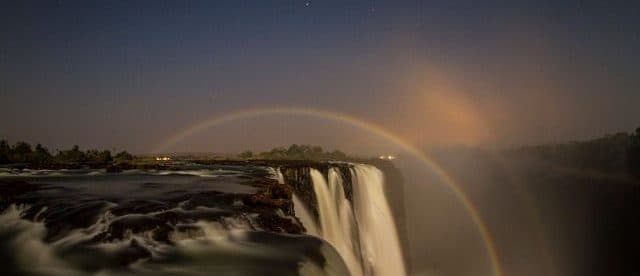
A rainbow painted across a star-filled sky sounds like something out of a myth, but it’s a real and spectacular phenomenon known as a lunar rainbow, or “moonbow.” It’s one of nature’s rarest displays, and there is no better place on earth to witness it than at the foot of the mighty Victoria Falls.
What Exactly Is a Lunar Rainbow?
A moonbow is created by the same physics as a daytime rainbow: light refracting through water droplets. The crucial difference is the light source. Instead of direct sunlight, a moonbow is formed by faint moonlight, which is just reflected sunlight. Because the light is so much weaker, lunar rainbows are incredibly subtle and far more difficult to see.
For a moonbow to appear, a few conditions have to align perfectly:
A Full or Near-Full Moon: The moon needs to be at its brightest to cast enough light.
Airborne Water Droplets: A huge amount of mist or spray must be hanging in the air opposite the moon.
A Dark Sky: The area needs to be truly dark, with no light pollution to wash out the faint colours.
That last point is why you can no longer see a moonbow at places like Niagara Falls, where city lights have overpowered the natural darkness. Victoria Falls, protected within a national park, still has the pristine dark skies needed for this spectacle.
Why Victoria Falls is the World’s Best Place to See a Moonbow
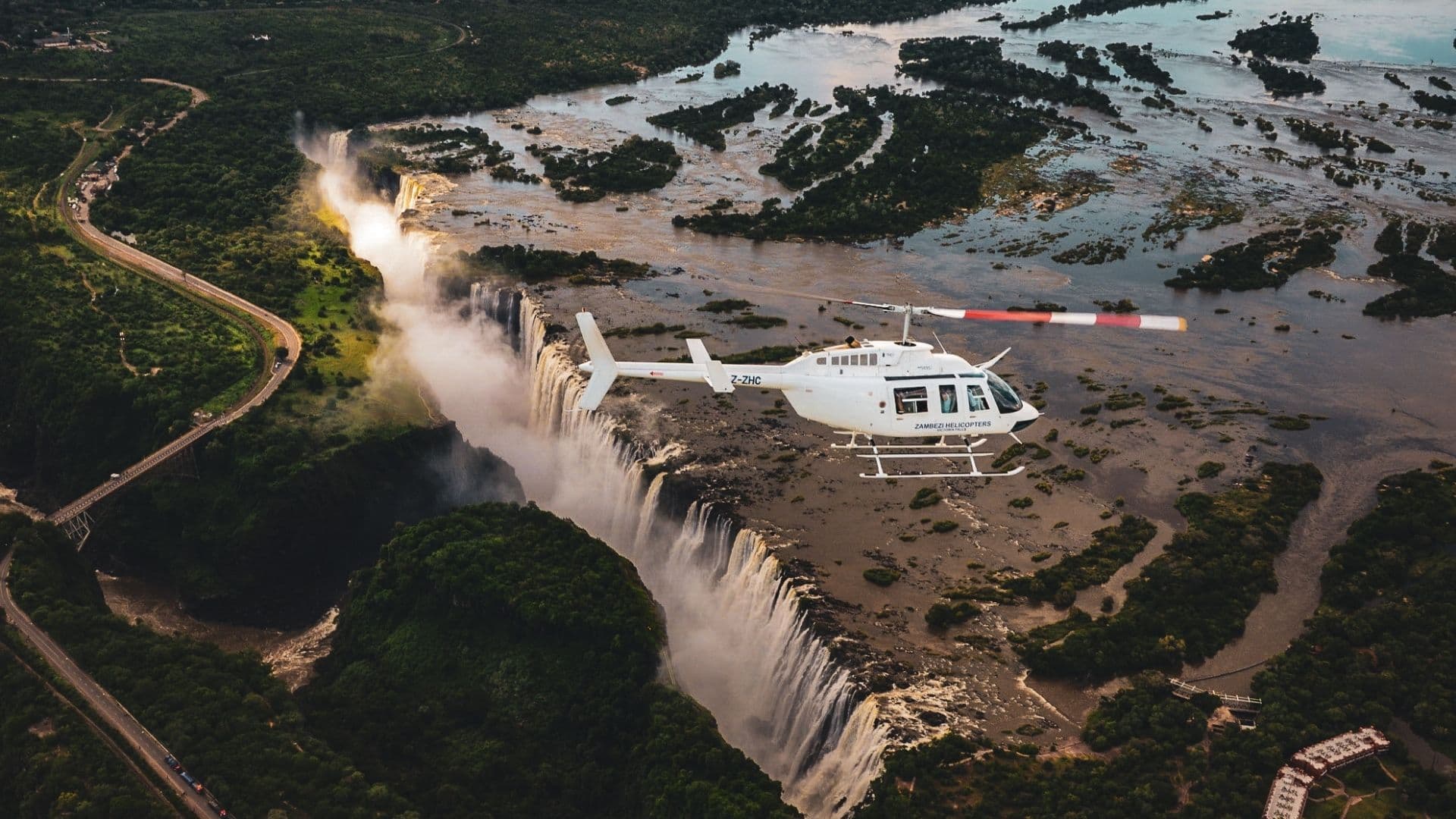
Victoria Falls is known locally as Mosi-oa-Tunya— “The Smoke That Thunders.” The name perfectly captures the colossal column of spray that rises hundreds of metres into the air as the Zambezi River plunges into the gorge. This constant, dense mist is the perfect canvas for a lunar rainbow.

During the high-water season, the sheer volume of spray is unmatched anywhere in the world. This cloud of water droplets creates the ideal conditions for moonlight to refract into a perfect arc. The experience is completely immersive: the thunderous roar of the water, the cool mist on your skin, and the ethereal sight of a silver bow hanging in the darkness. While it often appears white to the naked eye, long-exposure photography reveals the same vibrant colours of a daytime rainbow.
The prime viewing window for the most intense moonbows falls between March and June, when the Zambezi River is at its highest flow following the summer rains.
Planning Your Visit: Timing is Everything
Unlike a safari or a sunset cruise, you can’t just show up and expect to see a moonbow. Witnessing it requires precise planning around the season and the lunar cycle.
The Best Months (High-Water Season)
As local experts like Ilala Lodge note, the period from March to June is peak moonbow season. The Zambezi is full, generating the maximum amount of spray for the brightest and most complete lunar rainbows. The only catch? On some nights, the spray is so thick it feels like a downpour, which can obscure the view. Pack a good waterproof jacket!
The Low-Water Season
From September to December, the river’s flow drops. The Zambian side of the falls can even dry up almost completely. But moonbows are still visible. As tour operators like Wild Horizons explain, the Zimbabwean side maintains a year-round flow, so the show goes on. The moonbows might be smaller or confined to specific viewpoints, but they are no less magical.
The Full Moon Window
This is the most important rule: the Victoria Falls Rainforest only opens at night for special tours for three nights during each full moon cycle. These are the night of the full moon, the night before, and the night after. If a moonbow is on your bucket list, you have to plan your entire trip around these specific dates.
Let Us Plan Your Perfect Lunar Rainbow Trip
We handle the logistics—from full moon dates to lodge bookings—so you can focus on the magic of the moonbow.
What to Expect on a Lunar Rainbow Tour
A guided tour is the only way to enter the park after dark. Guides lead you along the rainforest paths to the best viewpoints, sharing insights about the falls and the phenomenon itself. The darkness, combined with the overwhelming sound of the water, creates an atmosphere of thrilling anticipation.

Be prepared for national park entry fees for this special viewing. As of early 2026, ZimParks fees for the lunar rainbow tour were updated to USD $100 for international tourists, with different rates for regional and local visitors. It’s a worthwhile investment for such a unique experience.
For photographers, a tripod is essential. You’ll need a long exposure—around 15-30 seconds—to capture the faint light and bring out the moonbow's hidden colours. For everyone else, the best advice is to put the camera away for a moment and simply soak in the incredible, otherworldly sight with your own eyes.

Seeing a lunar rainbow at Victoria Falls isn't just another item on a travel itinerary; it's a chance to connect with the raw power of nature. It’s a reminder that incredible beauty can be found even in the dark. Plan carefully around the moon and the seasons, and you can witness one of the planet's most enchanting spectacles.
Discussion (0)
No comments yet. Be the first to share your thoughts!
Leave a Comment